
Custom polo shirts are one of the hardest-working items in your marketing toolkit. It goes to job sites, client meetings, trade shows and weekend sports, and every time it does, your brand goes with it.
But if the polo shirt logo placement isn’t right, people look straight past it, or worse, it undermines the professional image you were trying to create. It’s a small decision with a surprisingly big impact on how your brand comes across in the real world.
In this article, we’ll walk through the main placement options, what each one suits, and how to make the right call before your order goes to print.
Not sure how to design your custom polo shirt? Our Gorilla Print graphic design team is here to help, offering tailored advice and quality designs.
Where Should You Place a Logo on a Polo Shirt? — in summary
- Logo placement affects how professional a branded polo shirt looks, how visible the logo is, and what it communicates about the brand. It’s a small decision with a real impact
- The left chest is the most common and reliable starting point, sitting naturally in the line of sight during face-to-face interactions and suiting most customer-facing roles
- Secondary placements, right chest, sleeve, back, collar, and hem, each serve a different purpose, from sponsorship identifiers and department labels through to high-visibility back branding for event staff and trade crews
- Size and placement work together: chest logos should be modest, back prints can carry more, sleeve logos should stay compact, and collar or hem placements work best with a simple mark rather than a full logo
- Decoration method should be chosen alongside placement, embroidery suits chest, sleeve, and collar positions, while screen printing and heat transfer are better suited to back placements and larger, more complex designs
- If ordering across a wide size range, it’s worth checking logo proportions with the supplier before production begins, as a logo that works at one size can look out of proportion on another
Your Logo Placement is Part of Your Brand
Most businesses spend considerable time getting their logo right, then make a snap decision about where to put it on the shirt. But where your logo sits affects how professional it looks, how visible it is, and what it communicates about your brand.
Polo shirts are one of the most widely used branded garments in Australia, which means placement mistakes are hard to hide. A logo that’s too large or in the wrong position for the context sticks out for all the wrong reasons.
Placement Options and When to Use Them
Start With the Left Chest
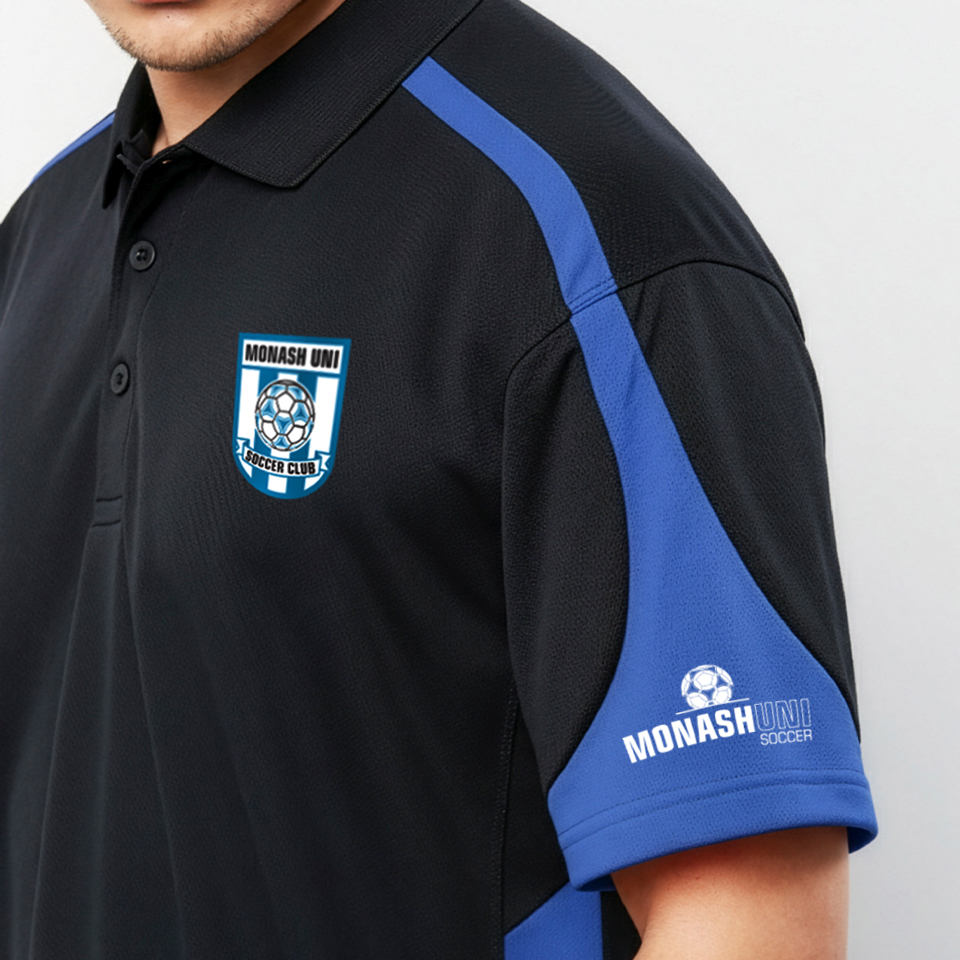
The left chest is the default for branded polo shirts, and for good reason. It sits naturally in the line of sight during face-to-face interactions, which makes it ideal for customer-facing roles. If you’re ordering polos for a team and you’re not sure where to start, start here.
When the Right Chest Makes Sense
The right chest is less common, which is precisely what makes it useful. It works well as a secondary placement alongside a left chest logo, a smaller version of the logo, a tagline, or a role or department identifier.
On its own, it can signal a deliberate design choice rather than a default one, which suits brands going for a more considered, contemporary look.
Using the Sleeve as a Secondary Placement
Sleeve placement works well for sponsorship logos, secondary branding, or identifiers like a team number or department name. It catches the eye during movement, handshakes, gestures, and physical work, making it a natural fit for trade businesses, sports teams, and event staff.
Make the Back Count
Back placement is for situations where your brand needs to be seen from a distance. Event staff, trade crews, and sports teams all benefit from a back logo; it’s visible in crowds, in the field, and in any setting where the front of the shirt isn’t always facing the audience.
Collar and Hem, The Understated Options
Collar and hem placements are the most subtle on the shirt and work best for brands where that restraint is intentional. A small embroidered mark on the collar signals quality and attention to detail without making a loud statement.
Hem placement is less common but adds an unexpected finishing touch for brands that want something a little different.
Logo Size: What Works Where
Size and placement go hand in hand; get one wrong, and the other doesn’t work. Here are a few practical guidelines to consider before you brief your designer:
- Chest Logos Should be Modest
The chest is the most common placement, but it’s not the place to go big. A logo that dominates the chest looks heavy and unbalanced. Aim for something visible and clear without overwhelming the shirt. - Back Prints can Carry More
The back gives you room to make a real statement. A larger version of your logo, your business name, a tagline, or a combination of all three all work well here; it’s the one placement where going bigger is the right call. - Sleeve Logos Should Stay Compact
The sleeve is a secondary placement, not a hero position. Keep it simple and treat it as a supporting element that complements what’s on the front. - Collar and hem Placements are About Subtlety
These positions work best with a simple mark or icon rather than a full logo with text. Less is more; the appeal of these placements is the understated finish they create.
It’s also worth remembering that a logo that works well at one size can look out of proportion on a different size. If you’re ordering across a wide size range, it’s worth checking with your supplier before production starts.
Which Decoration Method Works Best Where
Placement and decoration method are decisions that should be made together.
Embroidery suits chest, sleeve and collar placements well. It produces a raised, textured finish that holds up through repeated washing and daily wear. It works best with clean, bold logos rather than designs with fine detail or colour gradients.
Screen printing and heat transfer are better suited to back placements and larger designs, handling complexity and multiple colours more effectively than embroidery.
If you’re unsure which method suits your logo and placement, start with the design, the complexity, size and position will usually point you in the right direction.
Get Your Branded Polo Shirts Sorted
Gorilla Print offers a wide range of polo shirts across multiple styles and fabrics, with embroidery and print options available to suit any placement and any budget.
If you’re not sure where your logo should sit, what size it needs to be, or which decoration method suits your design, reach out to us, and we’ll point you in the right direction.

Greg Costaras
With over 25 years in print design and production, Greg is a specialist in the field, helping thousands of clients achieve their print dreams over that period.
Share This Post
More Posts
What Is the Difference Between Day and Night Hi-vis?
September 22, 2026

Embroidered vs Printed Polo Shirts
September 15, 2026
Basketball, Soccer or Rugby: Choosing the Right Uniform Style
September 8, 2026
What Makes Good Quality Workwear?
September 1, 2026