
Custom Greaseproof Paper for Cafés: What to Consider Before Ordering
- Greg Costaras
- Promotional Products
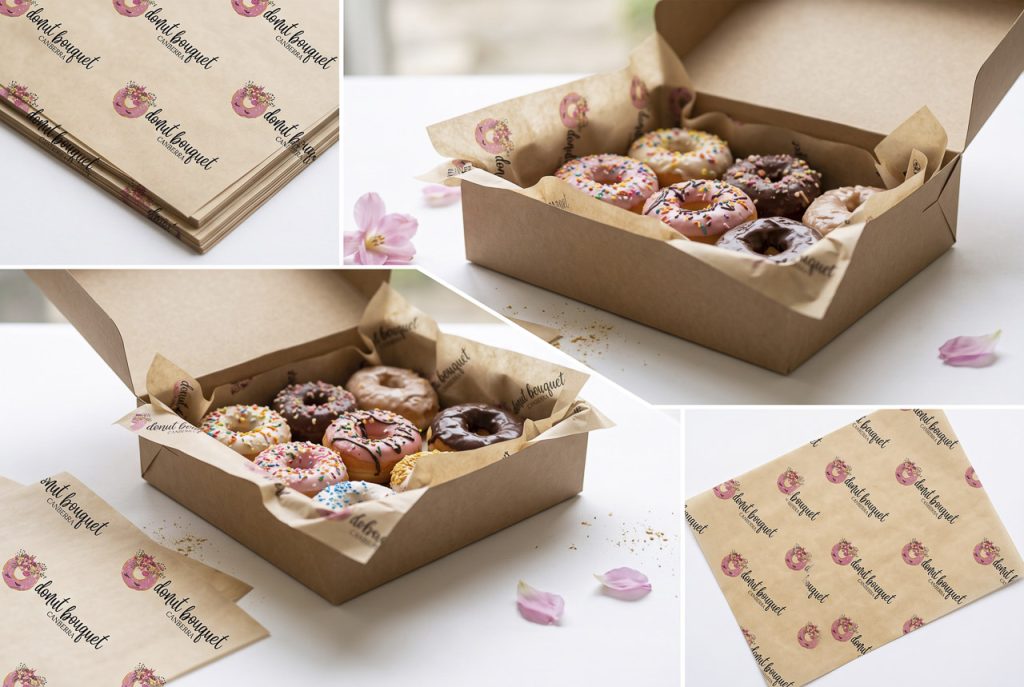
If you are ordering custom greaseproof paper for a café, start with the food you serve and the way the sheet will be used – not the logo. A sheet that works well as a quick pastry bag liner may need a different size, print layout or suitability check from one used to wrap a hot, oily toastie. The most useful brief covers the serving format, food-contact conditions, artwork repeat, quantity and delivery date before you approve a proof.
Key takeaways
- Choose the sheet around the job: wrapping, lining a tray or basket, separating baked goods, or presenting takeaway food.
- Confirm food-contact suitability for your actual food, temperature, storage time and intended use before you order.
- Design for a repeat pattern and the usable area of the sheet, rather than treating it like a small poster.
- Ask for a proof and confirm the current product, quantity and timing details in writing before production.
Start with the serve, not the sheet
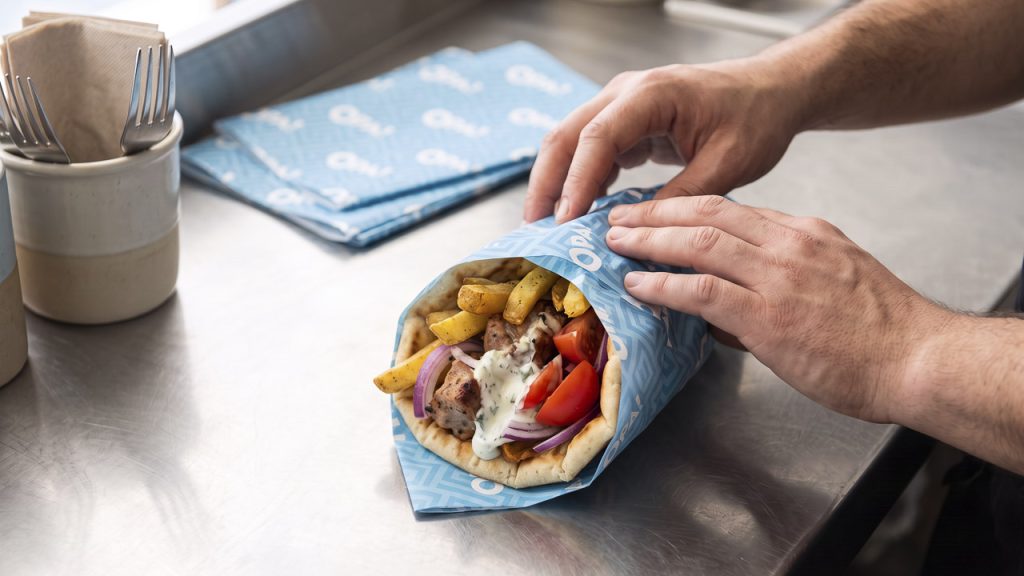
Custom greaseproof paper can do more than one job in a café, but each job changes the brief. A burger or toastie wrap needs enough paper to fold and hold the food. A tray or basket liner should frame the serve without hiding it. A pastry, cake or deli item may need a smaller sheet that keeps the counter presentation tidy. Write down the food item, its finished dimensions, whether it is hot or chilled, how long it sits in the paper and whether customers will carry it away.
That simple list prevents a common ordering mistake: choosing a sheet size from a screen image, then finding that the logo is folded under the food or the paper is too small for the actual serve. Gorilla Print currently lists 20 x 30 cm, 40 x 30 cm and 40 x 60 cm options for custom greaseproof paper. Treat those as starting points for a discussion, then check a folded sample or mock-up against the menu item you serve most often.
Match the design to how the paper is seen
A repeating logo pattern is usually more forgiving than one large centred graphic. It keeps part of the brand visible after folding, tearing or placing food on the sheet. Use generous spacing between repeats, keep small type away from likely fold lines and avoid placing essential information at the outer edge. If your design uses a light logo, fine linework or a colour-critical brand palette, ask to see how it will read at the final print size rather than judging it only from a large digital file.
For artwork supply, Gorilla Print’s general guidance asks for press-ready files and notes 300 dpi images at final print size, 3 mm bleed where required, and text kept inside the trim area. Because product templates can vary, request the greaseproof-paper template or confirmed artwork specification before finalising the layout. That is especially worthwhile when your artwork has an edge-to-edge background, closely spaced repeats or small legal/contact text.
Check food-contact suitability for the intended use
Food packaging is not a place to rely on assumptions. Food Standards Australia New Zealand advises food businesses to use packaging that is fit for its intended purpose and not likely to contaminate food. Suitability can depend on the food itself, including oily or acidic foods, as well as contact time, temperature, humidity, storage and any heating or freezing process.
Before ordering, give the supplier a clear use case: for example, “hot toasted sandwich, short service time” or “cold pastry liner in a display cabinet”. Ask for written confirmation of suitability for that application, including the relevant print side, food-contact arrangement and any limits on heating, cooking, microwave use or long-term storage. Do not assume that a paper suitable for one application is automatically suitable for another. Keep the confirmation with your food-safety and purchasing records.
Plan quantity around service volume and storage
A larger print run can be attractive, but it only helps if the design, menu and storage space are stable. Estimate usage from your busiest service periods as well as your average week, then allow for seasonal menu changes, a rebrand or a short campaign. Store unused sheets clean, dry and protected from dirt, pests and chemicals. If you are testing a new concept, a smaller first order or a simpler repeat design may reduce the chance of holding branded stock you can no longer use.
Make the proof do some work
A proof should confirm more than spelling. Check the final sheet size, orientation, repeat scale, print side, colours, safe area and the exact version of the logo. Then place a printed mock-up around or beneath the real food item. Can staff fold it consistently? Is the mark still visible at the point of handover? Does the sheet make the serve feel considered without getting in the way? These are practical production questions that are much cheaper to resolve before a full run.
Frequently asked questions
Should a café use a large logo or a repeating pattern?
For wraps and liners, a repeat pattern will often keep more of the brand visible after folding or serving. A large mark can work when the sheet is mostly seen flat, but test it with the actual menu item before approval.
What should I confirm before approving custom greaseproof paper?
Confirm the intended food use, sheet size, artwork specification, print layout, current minimum quantity, timing, delivery and the final proof. Ask the supplier to confirm any food-contact or process limits that matter to your service.
Can I use the same custom paper for every menu item?
Possibly, but check the fit and intended conditions first. A versatile liner may not be the most practical wrap, and foods with different temperatures, oils or holding times can require a separate suitability discussion.
Order with a complete brief
Custom greaseproof paper works best when it is treated as part of the serve, not an afterthought. Bring together a sample menu item, expected usage, a repeat-ready design and clear food-contact questions before you request a quote. If you need help turning that brief into a production-ready order, view Gorilla Print’s custom greaseproof paper options and discuss the final format and artwork requirements before production.

Greg Costaras
With over 25 years in print design and production, Greg is a specialist in the field, helping thousands of clients achieve their print dreams over that period.
Share This Post
More Posts
Booklet Printing for Product Catalogues
November 20, 2026

Mesh Banners vs Vinyl Banners: Which Should You Choose?
November 19, 2026
What Is the Difference Between Day and Night Hi-vis?
September 22, 2026