
Saddle Stitch, Perfect Binding or Wiro Binding: What’s Best for Your Booklet?
- Greg Costaras
- Stationery
- Booklets
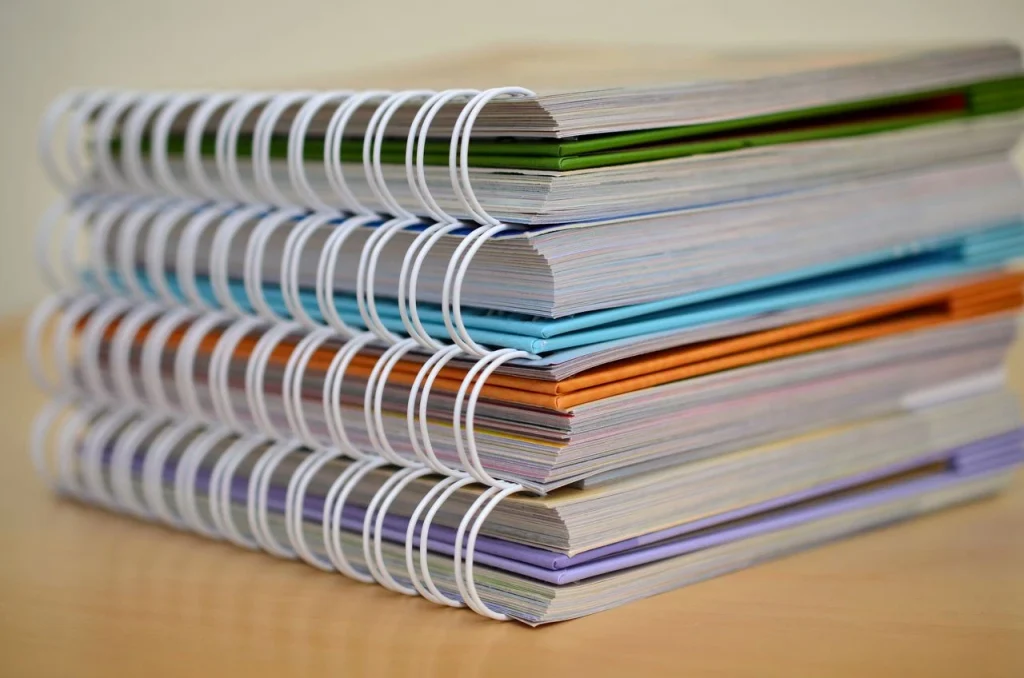
When you’re putting a booklet together, every detail matters, right down to the binding. It’s the decision most people haven’t thought about, yet it shapes how your booklet opens, feels and lasts.
The choice is simpler than it sounds.
A saddle stitch booklet suits shorter documents up to about 64 pages, especially on a budget. A perfect-bound booklet accommodates higher page counts with a premium, bookshop-style spine. And a wiro bound booklet wins whenever pages need to lie flat, like manuals and workbooks.
Below, we unpack all three booklet-binding types, so you know exactly which one your custom booklet printing project needs.
Key Takeaways
- Saddle-stitched booklets are folded and stapled through the spine, making them the most economical choice for shorter documents of 8 to around 64 pages (in multiples of 4).
- Perfect bound booklets are glued into a square, printable spine, giving larger documents like catalogues and reports a premium, bookshop-style finish.
- Wiro-bound booklets open completely flat and rotate 360 degrees, making them ideal for manuals, workbooks and calendars.
- The right binding comes down to three questions: how many pages, how the booklet will be used, and the impression you want it to make.
- Paper stock, cover weight and finish also shape the final result, so it’s worth talking these through before you print.
- Gorilla Print offers A4 and A5 booklet printing across all three binding styles, produced in Melbourne and delivered Australia-wide.
Booklet Binding Types Compared at a Glance
The three most popular booklet binding types are saddle stitch, perfect binding and wiro binding. Each suits a different page count, budget, and use case.
The table below compares them side by side so you can shortlist the right method in under a minute.
| Feature | Saddle Stitch | Perfect Binding | Wiro Binding |
|---|---|---|---|
| How it works | Folded sheets stapled through the spine | Pages glued into a cover with a square spine | Pages punched and held by a wire loop spine |
| Ideal page count | 8 to approx. 64 pages (multiples of 4) | Approx. 40 pages and up | Flexible, up to approx. 200 pages |
| Lies flat when open | Mostly | No | Yes, opens 360 degrees |
| Printable spine | No | Yes | No |
| Look and feel | Clean and economical | Premium, bookshop-style | Practical and hands-on |
| Best for | Programs, newsletters, thin catalogues | Catalogues, annual reports, longer books | Manuals, workbooks, calendars |
| Relative cost | $ | $$ | $$ |
Print is worth getting right, too. According to an international survey, 65% of consumers trust, enjoy and gain a deeper understanding of information they read in print, so the format your booklet takes genuinely shapes how your message lands.
What is a Saddle Stitch Booklet?
A saddle stitch booklet is made by folding printed sheets in half and stapling them through the fold with wire. It is the simplest and most cost-effective binding method, ideal for documents of up to around 64 pages. Page counts must be in multiples of four.
Saddle stitching is the workhorse of booklet printing, and for good reason. It turns around quickly, keeps costs down on both short and long runs, and looks clean and professional. It is the go-to choice for:
- Event programs and orders of service
- Newsletters and community publications
- Product flyers, price lists and thin catalogues
- Instruction leaflets and welcome packs
Because pages are folded and nested, keep important text and images away from the spine and trim edges. The team at Gorilla Print checks every booklet file before printing, so nothing gets lost in the fold.
When a Perfect Bound Booklet is the Better Choice
A perfect bound booklet has its pages glued into a wraparound cover, creating a flat, square spine like a paperback book. It suits higher page counts and delivers a premium feel, which makes it the standard for catalogues, annual reports and magazines.
The square spine is the big drawcard. It can be printed on, so your booklet stands out on a shelf, and it photographs beautifully for marketing. Perfect binding does have two trade-offs to plan for:
- It will not open completely flat, so keep critical content away from the spine.
- It needs a reasonable page count, generally around 40 pages or more, to form a proper spine.
If your booklet is a brand piece designed to impress, such as a lookbook, prospectus, or capability statement, a perfect-bound booklet is usually worth the small step-up in cost.
Why Choose a Wiro Bound Booklet?
A wiro bound booklet uses a metal wire spine threaded through punched holes along the edge of the pages. Its standout benefit is function: the booklet opens completely flat, and pages rotate a full 360 degrees, making it ideal for documents people write in or work from.
That lay-flat quality makes wiro binding the practical favourite for:
- Training manuals and workbooks
- Recipe books and how-to guides
- Wall and desk calendars
- Presentation documents and reports
Wire spines come in a range of colours and diameters, so a wiro-bound booklet can still look sharp and on-brand. The main limitation is that the spine itself cannot be printed, so plan your branding for the front and back covers instead.
How to Choose Between Booklet Binding Options
Choosing the right booklet binding comes down to three simple questions: How many pages does it have? How will it be used? And what impression do you want it to make?
Once you know the answers, choosing the right binding is much easier. Still on the fence? Paper stock, cover weight and finish all influence the final result too, and that’s where a quick chat helps.
Gorilla Print offers A4 and A5 booklet printing with saddle stitching and thicker cover options, produced in Melbourne and delivered Australia-wide.
‘My rule of thumb is simple: if it’s short, stitch it; if it’s substantial, perfect bind it; if people need to write in it, wiro it. Once you’ve chosen, everything else about the design falls into place’.
– Marilyn Nicola, Senior Graphic Designer
Answering Booklet Printing Questions
How much does book binding cost?
It depends on the binding method, page count and quantity. Saddle stitching is the most economical option, while perfect and wiro binding cost a little more due to the extra materials. Gorilla Print provides tailored quotes, so you’ll know your exact cost before anything goes to print.
What is the best type of book binding?
There’s no single best option, only the best fit for your project. You’ll need to carefully consider the purpose of your booklet, your budget and goals to determine the best bind.
Do I need to supply my artwork differently for each binding type?
Yes, each method has different spine and margin requirements. Saddle stitch requires page counts in multiples of four, perfect binding requires spine-width allowances, and wiro binding requires a clear margin for punched holes.
Which booklet binding looks the most professional?
Perfect binding generally looks the most polished thanks to its square, printable spine, which gives booklets a bookshop-quality finish. That said, a well-produced saddle stitch or wiro booklet on quality stock can look every bit as professional.
Which booklet binding lasts the longest?
Perfect binding is the most durable for everyday handling, with a strong glued spine that holds up over time. Wiro binding is a close second and copes well with heavy, hands-on use, such as opening manuals flat repeatedly.
Get the Right Binding on Your Next Booklet
Every booklet has a job to do, and the binding is what lets it do that job well. Match the method to your page count and purpose, and your booklet will feel as considered as the content inside it.
If you’d rather not second-guess it, send your booklet specs to Gorilla Print and our team will recommend the best binding, stock and cover combination for your budget, with fast delivery anywhere in Australia.

Greg Costaras
With over 25 years in print design and production, Greg is a specialist in the field, helping thousands of clients achieve their print dreams over that period.
Share This Post
More Posts
What Is the Difference Between Day and Night Hi-vis?
September 22, 2026

Embroidered vs Printed Polo Shirts
September 15, 2026
Basketball, Soccer or Rugby: Choosing the Right Uniform Style
September 8, 2026
What Makes Good Quality Workwear?
September 1, 2026