
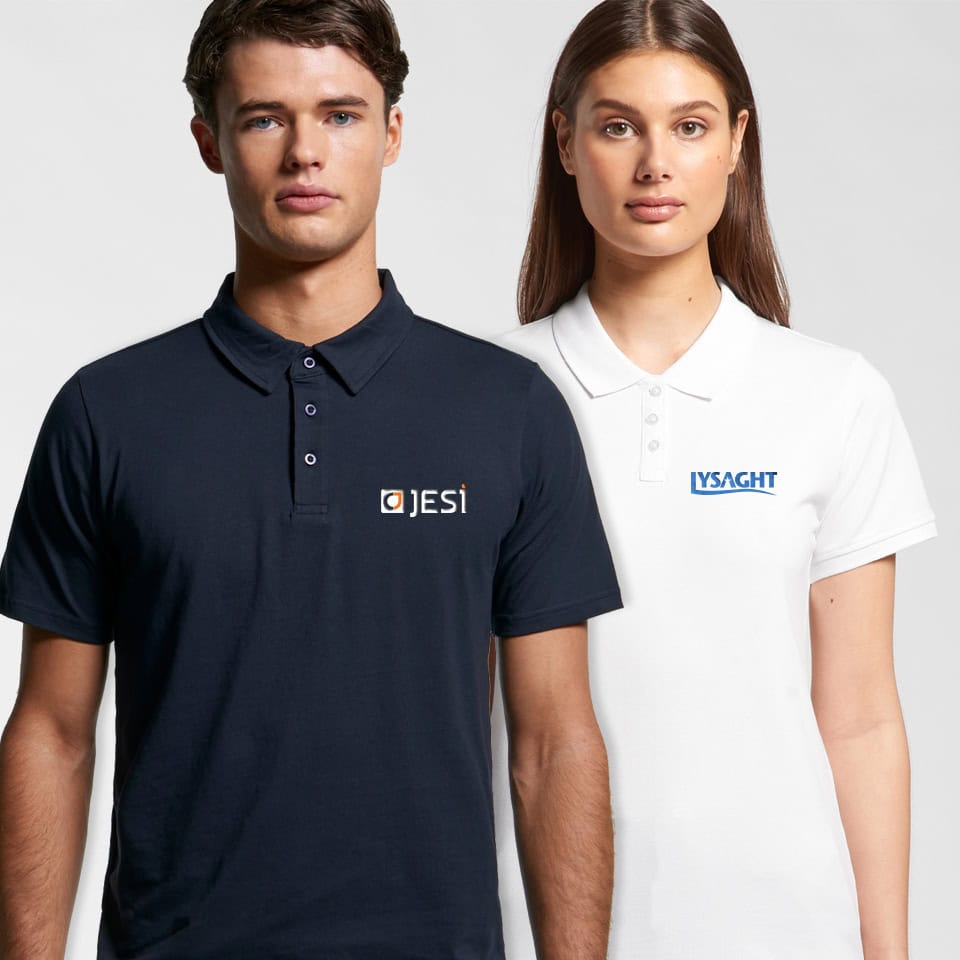
Polo shirts are one of the hardest-working pieces of kit in any business wardrobe. From tradie sites to front-of-house teams, embroidered and custom-printed polo shirts put your brand in front of people every single day.
Because of this, it’s all the more frustrating when the logo starts cracking, fading, or pilling after just a few washes. The good news is that most of that damage is avoidable.
This printed polo shirt care guide covers everything you need to know to keep your printed and embroidered polo shirts looking sharp, wash after wash.
Interested in custom-printed polo shirts? Gorilla Print is Melbourne’s go-to for professional screen printing, embroidery and dye sublimation. Get in touch with our team today.
Polo Shirt Care Guide for Printed and Embroidered Logos — in summary
- How a logo is applied determines how it should be cared for
- Before the first wash, and every wash after, polo shirts should be turned inside out, zips closed, buttons undone, and pockets checked
- Cold water, gentle detergent, and washing with similar colours and fabrics are the key steps to protecting both print and embroidery
- The dryer is one of the fastest ways to wreck a branded polo
- When ironing is needed, the garment should be turned inside out, the lowest heat setting used, and the iron never applied directly over a print
- Polos should always be stored clean and fully dry, folded along the seams rather than through the print, and kept away from direct sunlight, whether between shifts or between seasons
Know Your Decoration: Print vs Embroidery
Not all branded polo shirts are created equal, and neither are the care rules. How your logo is applied makes a real difference to how you should look after it, so it’s worth knowing what you’re working with before you throw anything in the wash.
Printed Logos
Whether screen printed, digitally printed, or heat transferred, printed logos sit on top of the fabric as a layer of ink or film. They look sharp and vivid, but that surface layer is vulnerable to heat, harsh chemicals, and friction.
Get the care wrong, and you’ll start to see cracking, peeling, or fading, usually right across the chest where your brand name lives.
Embroidered Logos
Embroidered logos are stitched directly into the fabric, which makes them naturally more durable. They can handle slightly higher wash temperatures and more wear and tear than printed designs.
That said, they’re not bulletproof; snag the threads or iron directly over them, and you’ll still cause damage. The good news? Many printed and embroidered polo care rules overlap. The differences are mostly in the details.
Before the First Wash
New polo shirts carry residual dyes, finishing chemicals, and manufacturing residues.
Washing before wear removes all of that and gives you an early read on how the garment behaves; any minor colour bleed happens now rather than on your best corporate shirt or your team’s match-day kit.
Before that first wash, and every wash after it, run through this quick checklist:
- Turn the garment inside out
- Close any zips
- Undo buttons
- Check pockets for pens, coins, or anything sharp
- Wash on a gentle cold cycle
These simple steps might be easy to skip, but they are worth doing every time.
Washing Your Polo Shirts the Right Way
The washing machine is where most branded polos meet their end. Follow these steps and your logos will stay sharp wash after wash.
Step 1: Turn it Inside Out
This is the single biggest thing you can do to protect your print or embroidery. It reduces friction in the design cycle and shields the logo from direct contact with other garments.
Step 2: Wash Cold
Hot water causes colour to run and fade in both the print and the fabric itself. A cold cycle is more than enough to clean a polo shirt, and research from the University of Leeds found that washing at 30°C uses about 40% less energy than at 40°C, so it’s better for your polos and your power bill.
Step 3: Use the Right Detergent
Gentle detergent only. No bleach, no fabric softener, no harsh chemicals; these are the fastest ways to crack a screen print or break down embroidery threads.
Step 4: Wash With Like Colours and Fabrics
Keep darks with darks and lights with lights, especially for the first few washes. Avoid washing with heavy items like jeans, towels, or zipped jackets; they’re rough on decorated garments and create excess friction.
Drying: The Rule That Saves Every Logo
Here’s where a lot of businesses undo all the good work from the wash cycle. The dryer feels convenient, but for branded polos, it’s one of the fastest ways to wreck a logo.
Heat causes printed designs to crack, peel and shrink, and repeated tumble drying will degrade embroidery threads over time too. Keep it simple:
- Air dry inside out in a shaded spot
- Never tumble dry
- Avoid direct sunlight
- Get them on the line as soon as the cycle finishes
Ironing and Steaming Without Wrecking the Design
Most polo shirts won’t need ironing if they’re air-dried properly, but when they do, there’s a right way and a very wrong way to do it.
- Turn the garment inside out before ironing
- Use the lowest heat setting on your iron
- Never iron directly over a print
- For embroidery, place a thin cloth between the iron and the garment for extra protection
- Steaming works well as an alternative; always apply from the reverse side of the print
- Vinyl prints can crease when folded; a cool iron on the reverse side will smooth them out without causing damage
If you’re unsure, test on an inconspicuous area first. A few seconds of caution beats a ruined logo on the front of a staff uniform.
Storing Your Polos so They Stay Presentable
How you store your polo shirts matters, especially for businesses running staff uniforms or teams keeping kit between seasons.
Always Store Clean
Stains and moisture left in fabric will set over time and are often impossible to remove. Make sure garments are fully dry before putting them away.
Folding and Hanging
Fold along the seams rather than through the print to avoid creasing across the design. If hanging, use padded hangers; wire hangers cause the shoulders to stretch and distort. Don’t cram them into drawers or tight shelving; excess pressure on a printed logo causes cracking over time.
Travelling or Between Seasons
Rolling is a good option for travel or kit bags, it reduces pressure on the print and keeps the garment wrinkle-free. Store seasonal kit in a cool, dry place away from direct sunlight.
Ready to Order Polo Shirts That are Built to Last?
A great care routine starts with a quality garment. At Gorilla Print, we stock a full range of polo shirts, all available with professional screen printing, embroidery, and dye sublimation to suit your brand and your budget.
Whether you’re kitting out a team, updating staff uniforms, or looking for promotional clothing that actually gets worn, our team will help you choose the right garment and the right decoration method for the job.

Greg Costaras
With over 25 years in print design and production, Greg is a specialist in the field, helping thousands of clients achieve their print dreams over that period.
Share This Post
More Posts
What Is the Difference Between Day and Night Hi-vis?
September 22, 2026

Embroidered vs Printed Polo Shirts
September 15, 2026
Basketball, Soccer or Rugby: Choosing the Right Uniform Style
September 8, 2026
What Makes Good Quality Workwear?
September 1, 2026