
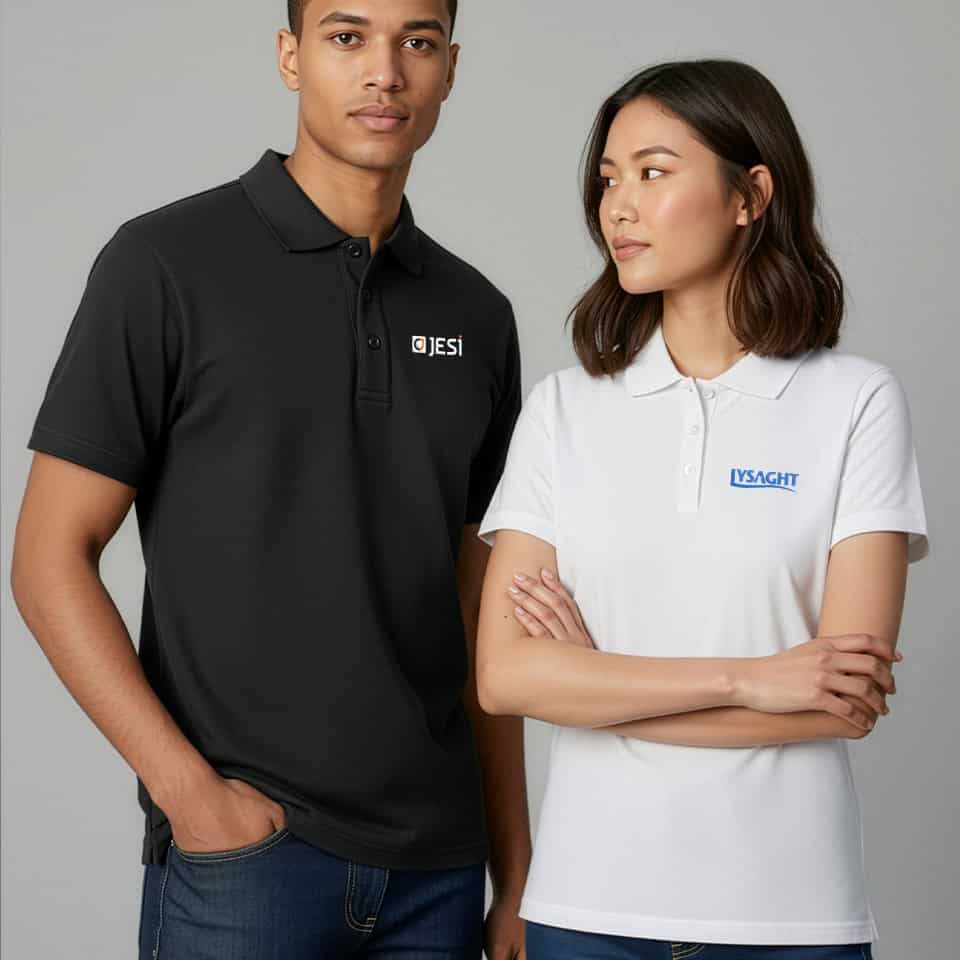
Your logo is the easy part. The harder call is how it ends up on the shirt. Embroidered and printed polo shirts both look sharp on day one, but they behave very differently after fifty washes, a hot Australian summer, and a few years of daily wear. Get the method wrong for your logo or your fabric, and you end up reordering sooner than you planned, or paying more than you needed to.
This guide breaks down exactly how embroidery and printing compare, so you can order embroidered and printed polo shirts that actually hold up.
Which Is Better: Embroidered or Printed Polo Shirts?
What Is Embroidery on Polo Shirts?
What Is Printing on Polo Shirts?
Embroidered vs Printed Polo Shirts: Side-by-Side Comparison
Durability: Which Finish Lasts Longer?
Cost: Which Option Is More Affordable?
Design Complexity and Logo Detail
Which Fabric Suits Which Method?
Article Summary
- Embroidery gives a raised, stitched finish that suits corporate and premium branding, while printing suits colourful, detailed or budget-conscious designs.
- Embroidered logos generally outlast printed logos through repeated washing and daily wear.
- Screen printing costs less for small orders and simple one or two colour logos, while embroidery has a flat setup cost regardless of colour count.
- Printing handles gradients, photographic detail and large back designs better than embroidery.
- Fabric choice matters: cotton piqué polos suit embroidery well, while poly-based polos often suit sublimation or digital print.
- Many Australian businesses combine both methods, embroidering the chest logo and printing a larger back design on their embroidered and printed polo shirts from Gorilla Print.
Which Is Better: Embroidered or Printed Polo Shirts?
There is no single winner between embroidered and printed polo shirts. Embroidery suits small, simple logos that need to survive years of washing, while printing suits colourful or detailed designs on a tighter budget. Gorilla Print supplies both options, so the right call comes down to your logo, budget and how the shirts will be worn.
The decision usually comes down to three questions: how detailed is your logo, how often will the polo be washed, and how many are you ordering? Answering those three questions upfront saves a lot of back and forth once artwork is submitted.
What Is Embroidery on Polo Shirts?
Embroidery stitches a design directly into the fabric using coloured thread, building up the logo needle pass by needle pass. The result is a raised, textured finish that reads as premium and holds its shape well over time.
Because embroidery is built from thread rather than ink, it naturally suits:
- Small chest logos and text
- Simple shapes with two to eight thread colours
- Corporate uniforms worn daily
- Polos, caps and jackets with a firmer weave
Very fine detail, thin gradients and photographic artwork tend to lose clarity in thread, which is why embroidery works best on clean, simplified logos rather than complex illustrations.
What Is Printing on Polo Shirts?
Printing applies ink or dye directly to the fabric surface, either through a mesh screen, a digital printer, or heat transfer, to reproduce a design in full colour. It gives a flatter finish than embroidery but handles far more colour and detail.
The three printing methods most relevant to polo shirts are:
- Screen printing: Pushes ink through a mesh stencil, one screen per colour. Cost-effective for larger runs of simple, flat-colour designs.
- Digital or heat transfer printing: Suits full-colour, photographic or gradient artwork in smaller quantities.
- Dye sublimation: Bonds dye into the fibres of polyester fabric, ideal for all-over or large-format designs on sports and performance polos.
Printing is generally the better fit for larger back prints, multi-colour branding, or designs that change from event to event.
Embroidered vs Printed Polo Shirts: Side-by-Side Comparison
Placing the two methods side by side makes the trade-offs easier to see at a glance. Both can look excellent on a polo shirt, but they suit different logos, budgets and use cases.
| Factor | Embroidery | Printing |
|---|---|---|
| Finish | Raised, textured, premium feel | Flat, vibrant, photographic detail |
| Best for | Small logos, text, corporate uniforms | Large graphics, multi-colour or gradient designs |
| Durability | Very high, resists washing and wear | Good, but can fade or crack over time on high-use garments |
| Setup cost | One-off digitising fee, no per-colour cost | Screen printing adds cost per colour; digital print has lower setup |
| Ideal fabric | Cotton piqué, poly-cotton blends | Polyester (sublimation) or cotton-rich blends (screen/digital print) |
| Common use | Office uniforms, hospitality, trades | Sports teams, event merchandise, promotional giveaways |
Durability: Which Finish Lasts Longer?
Embroidered logos hold up better than printed logos over years of regular washing and wear. Embroidered logos tend to last longer through washes and wear, while printed logos may fade or crack over time.
That does not rule printing out for durability-sensitive orders. Quality screen printing on well-prepared fabric, cared for correctly, can still last for years of regular wear. Where longevity matters most, such as everyday corporate uniforms or hi-vis workwear, embroidery is usually the safer long-term choice
Cost: Which Option Is More Affordable?
For small orders with a single simple logo colour, screen printing or digital printing is often the cheaper option upfront. For larger, multi-colour designs, embroidery can work out more cost-effective because thread colour count does not add extra screens or setup charges the way screen printing does.
Key cost factors to weigh up:
- Screen printing setup rises with every additional ink colour
- Embroidery setup is a flat digitising fee, regardless of thread colours
- Larger order volumes reduce the per-unit cost of both methods
- Complex, highly detailed logos generally cost more to embroider than to print
Design Complexity and Logo Detail
Printing handles fine detail, gradients and photographic imagery far better than embroidery. If your logo includes shading, a photo, or more than eight or nine colours, printing will reproduce it more accurately.
Embroidery, on the other hand, is best suited to simplified logos, wordmarks and icons. A design with fine serif text or thin overlapping lines can lose legibility once stitched, so it is worth simplifying artwork before it goes to the embroidery machine.
Logo clarity matters beyond aesthetics too. According to business.gov.au’s Register of Approved Occupational Clothing guidelines, a registered uniform’s logo must be in a contrasting colour and visible from a two-metre distance, and the garment range itself is capped at a maximum of eight colours.
That same principle holds whether you’re embroidering or printing: a logo that reads clearly at a distance, in a limited colour palette, will translate more reliably into thread or ink than one built for a screen.
Which Fabric Suits Which Method?
Fabric composition changes how well each decoration method performs. Cotton piqué, the classic polo fabric, has a firm knit structure that anchors embroidery stitching cleanly. Polyester performance fabric behaves differently and often suits dye sublimation, since the dye bonds into the polyester fibres rather than sitting on the surface.
- 100% cotton or poly-cotton polos: suit embroidery and screen or digital printing
- 100% polyester performance polos: suit dye sublimation for vibrant, long-lasting colour
- Hi-vis and workwear polos: usually embroidered for durability under frequent industrial washing
Choosing the Right Option for Your Business
Match the decoration method to how the polo will actually be worn, not just how the logo looks on screen. A gym team polo photographed for social media has different priorities to a tradie’s daily uniform.
“We always ask what the polo needs to survive before we ask what it needs to look like. Get that right, and the branding decision usually makes itself.”
– Greg Costaras, Owner
A simple way to decide:
- Choose embroidery for daily corporate uniforms, small logos, and long-term durability
- Choose printing for colourful designs, large back graphics, or one-off event runs
- Combine both if your logo has a simple mark plus a detailed tagline or graphic
Frequently Asked Questions
What is the minimum order quantity for custom polo shirts?
Minimum order quantities vary by decoration method and fabric, with embroidery generally having a lower minimum than screen printing since there’s no per-colour setup. Gorilla Print can confirm the exact minimum for your chosen style and quantity when you request a quote.
How do I care for embroidered or printed polo shirts to make them last?
Wash embroidered and printed polos inside out in cold water, and avoid tumble drying or ironing directly over the logo. Following these steps helps protect stitching and printed detail alike, extending the life of the branding regardless of which method you choose.
Can you combine embroidery and printing on the same polo shirt?
Yes. Many businesses embroider a small chest logo and print a larger, more detailed design on the back or sleeve.
Does printing work on every polo shirt fabric?
Not always. Dye sublimation only works on polyester or high-poly blends, while screen and digital printing suit cotton-rich fabrics best.
Get Your Polo Shirts Branded the Right Way
Choosing between embroidered and printed polo shirts is easier once you know how the shirts will actually be used day-to-day. If you are still weighing up the two, send through your logo and Gorilla Print’s design team can recommend the decoration method that suits your artwork, fabric and budget.
Get a free quote on custom polo shirts from Gorilla Print today, and see a mockup before anything goes to print.

Greg Costaras
With over 25 years in print design and production, Greg is a specialist in the field, helping thousands of clients achieve their print dreams over that period.
Share This Post
More Posts
Basketball, Soccer or Rugby: Choosing the Right Uniform Style
September 8, 2026

What Makes Good Quality Workwear?
September 1, 2026
How to Build a Branded Giveaway Pack for Events
August 18, 2026