
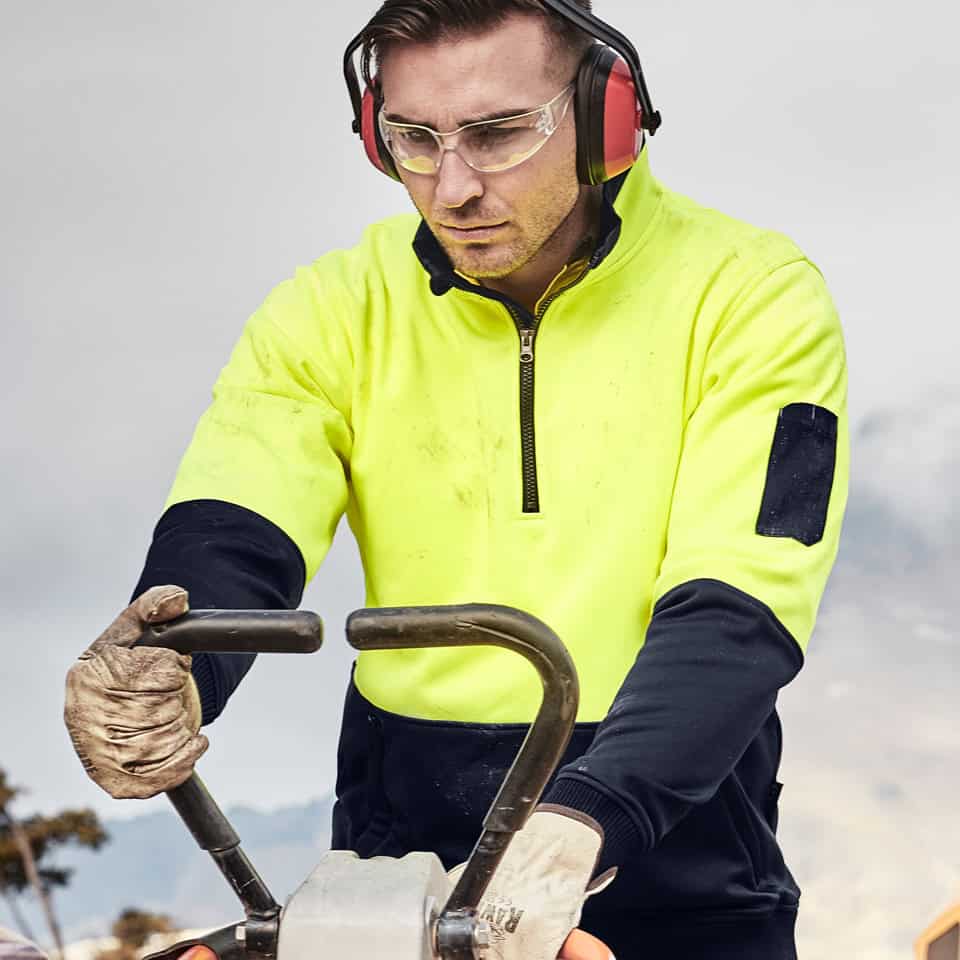
Good workwear survives the job. Bad workwear falls apart under it, and it usually happens at the worst possible time, mid-shift, mid-season, right when you cannot afford to replace it. The difference rarely comes down to price alone. It comes down to fabric, construction and fit working together.
This guide breaks down exactly what to look for, so your team ends up in branded workwear that actually lasts.
What Actually Makes Workwear Good Quality?
Fabric: The Foundation of Good Quality Workwear
Durability: How Workwear Holds Up to the Job
Fit and Comfort: Why It Matters as Much as Fabric
Construction Details That Signal Quality
Quality Workwear vs Cheap Workwear: Side-by-Side Comparison
Branding Without Compromising Quality
Article Summary
- Good quality workwear starts with fabric suited to the actual job, not just the industry in general.
- Durability comes from a combination of fabric weight, weave and reinforced construction, not fabric alone.
- Fit and comfort directly affect safety, since ill-fitting garments can catch on tools or cause workers to remove protective clothing altogether.
- Reinforced seams, quality stitching and appropriate pockets are practical signals of a well-made garment.
- Cheap workwear often costs more over time through frequent replacement, even when the upfront price looks lower.
- Branding can be added to quality workwear without compromising its durability or fit when placed correctly.
What Actually Makes Workwear Good Quality?
Good quality workwear comes down to three things working together: fabric suited to the job, construction that holds up to repeated wear and washing, and a fit that lets the wearer move freely. Missing any one of these means the garment will fail sooner than it should, regardless of how good it looks on day one.
It is easy to judge workwear on appearance alone, but the features that actually matter are mostly practical rather than visual:
- Fabric weight and weave suited to the work involved
- Reinforced stitching at stress points
- A cut that allows full range of motion
- Consistent sizing across a full team order
Fabric: The Foundation of Good Quality Workwear
Fabric choice affects everything else about a garment, from how long it lasts to how comfortable it is to wear through a full shift. The best fabric for workwear depends on the job, not a single universal answer.
Common workwear fabrics and where they suit:
- Cotton: Breathable and comfortable, well suited to warmer climates and roles with moderate physical activity
- Poly-cotton blends: Add durability and shape retention to cotton’s comfort, a common middle ground for everyday trade and hospitality workwear
- Polyester and synthetic performance fabrics: Manage moisture and dry faster, suited to physically demanding roles
- Heavier, reinforced fabrics: Built for environments involving abrasion, tools or rough surfaces, such as construction
Matching fabric to the actual working environment matters more than chasing a single “best” fabric across the board.
Durability: How Workwear Holds Up to the Job
Durability is not just about thick fabric. It comes from how the fabric is woven, how heavy it is, and how well the garment is put together at the seams and stress points. A heavy fabric with weak stitching will still fail early, just in a different place.
Key durability factors to check:
- Fabric weight, since heavier fabrics generally resist abrasion better
- Reinforced seams at high-movement points such as underarms and knees
- Quality of stitching, including stitch density and thread strength
- How the fabric performs after repeated industrial washing, not just on day one
Fit and Comfort: Why It Matters as Much as Fabric
Fit is not just about appearance. Poorly fitting workwear can catch on tools, restrict movement, or become uncomfortable enough that workers stop wearing it correctly. For garments that double as personal protective equipment, this has real safety implications, not just comfort ones.
According to Safe Work Australia’s guidance on PPE, protective equipment must be a suitable size, reasonably comfortable, and fit for purpose for the person wearing it. While general workwear such as branded polos is not classified as PPE, the same principle holds: a garment that does not fit properly does not do its job, whether that job is protection, professionalism or simple day-to-day comfort.
Practical fit considerations include:
- A full size range that reflects your actual team, not just standard sizing
- Enough room for movement without excess loose fabric that can catch
- Consistent sizing across garment types so uniforms match properly
Construction Details That Signal Quality
The small construction details are often the clearest sign of whether a garment was built to last. These are the features worth checking before committing to a bulk order, not after.
Look for these construction signals:
- Double-stitched or reinforced seams, particularly at pockets and cuffs
- Bar tacking at stress points such as pocket corners
- Quality zippers and buttons that will not fail after repeated use
- Fabric that resists fraying at cut edges
Quality Workwear vs Cheap Workwear: Side-by-Side Comparison
Placing the two side by side makes the long-term difference easier to see, beyond the upfront price tag.
| Factor | Quality Workwear | Cheap Workwear |
|---|---|---|
| Fabric | Weight and weave matched to the job | Often generic, not job-specific |
| Seams | Reinforced at stress points | Single-stitched, prone to fraying |
| Fit | Consistent sizing, room to move | Inconsistent sizing across a team order |
| Lifespan | Withstands repeated industrial washing | Fades, shrinks or tears early |
| Long-term cost | Fewer replacements over time | Frequent reordering, hidden costs |
Branding Without Compromising Quality
Adding a logo to workwear should not come at the cost of the garment’s durability or fit. The decoration method and placement both matter just as much as the base garment itself.
“We always start with the garment, not the logo. A great print on a poor-quality shirt is still a poor-quality shirt.”
– Greg Costaras, Owner
- Choose a decoration method suited to how often the garment will be washed
- Avoid placing large prints or heavy embroidery over seams or stretch points
- Confirm your supplier tests branding on the actual fabric, not just a sample swatch
Choosing the Right Workwear for Your Team
Match the workwear to how your team actually works, not just to what looks good in a catalogue. A warehouse role, an outdoor trade role and a client-facing office role all have different fabric, fit and durability needs.
A simple way to think about it:
- Choose breathable cotton or poly-cotton blends for moderate indoor or office-based roles
- Choose performance or reinforced fabrics for physically demanding or outdoor roles
- Prioritise fit and consistent sizing across the whole team, not just individual garments
- Ask your supplier about construction details, not just fabric type, before ordering in bulk
Frequently Asked Questions
What fabric is best for workwear?
There is no single best fabric, since the right choice depends on the job. Cotton suits comfort-focused roles, poly-cotton blends balance comfort and durability, and heavier or synthetic fabrics suit physically demanding or outdoor work.
How do I know if workwear is good quality?
Check the fabric weight, look for reinforced seams at stress points, and confirm the sizing is consistent across a full team order rather than relying on appearance alone.
What makes workwear durable?
Durability comes from the combination of fabric weight, weave, and quality construction, particularly reinforced stitching at high-movement points like underarms, knees and pockets.
Does branding affect the quality of workwear?
Branding itself does not reduce quality, but poor placement over seams or stretch points can affect both the garment’s durability and its comfort, so decoration method and placement should be planned around the base garment.
Get Quality Branded Workwear From Gorilla Print
Once you know what to look for, choosing workwear that actually lasts becomes a lot more straightforward. Gorilla Print’s team can help you select the right fabric, fit and decoration method for your industry, so your branding holds up as well as the garment underneath it.
Get a free quote on custom branded workwear from Gorilla Print today, and see a mockup before anything goes into production.

Greg Costaras
With over 25 years in print design and production, Greg is a specialist in the field, helping thousands of clients achieve their print dreams over that period.
Share This Post
More Posts
What Is the Difference Between Day and Night Hi-vis?
September 22, 2026

Embroidered vs Printed Polo Shirts
September 15, 2026
Basketball, Soccer or Rugby: Choosing the Right Uniform Style
September 8, 2026